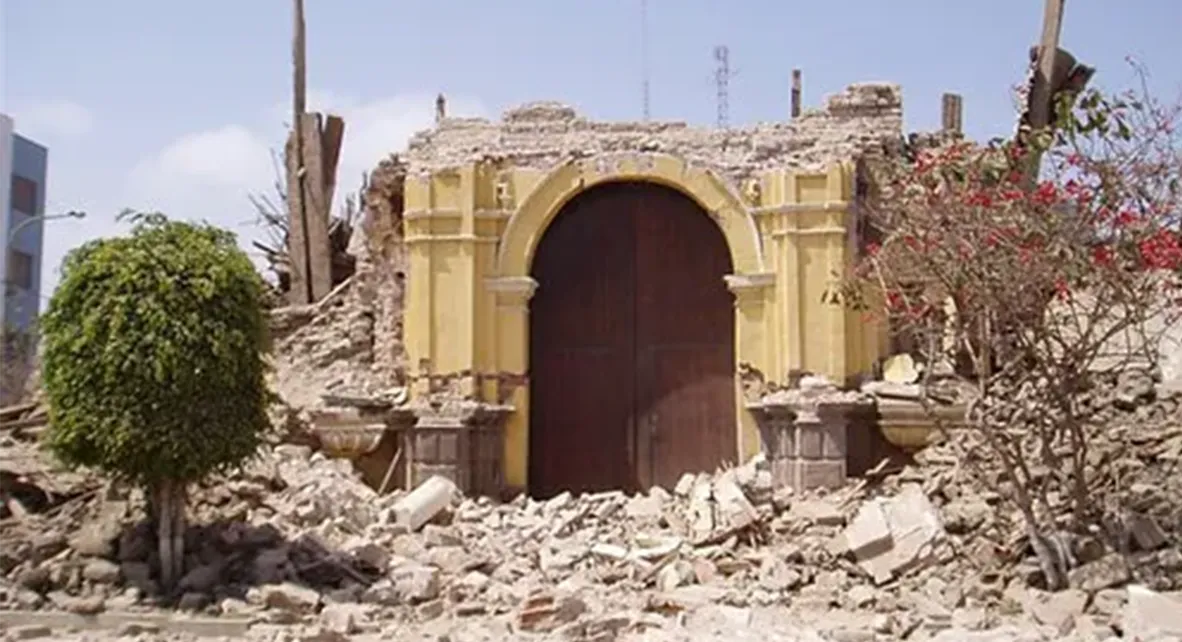
Any individual disaster is unpredictable, but that there will be future disasters is certain. Equally certain is that we know where they will be most deadly and destructive – in the world's great urban centers. Many of these cities are coastal, built on reclaimed or geologically unstable land, and often home to informal settlements made of low-quality materials and increasingly susceptible to damage. Such devastation will have both a human cost and an economic one.
The engineering case for disaster risk mitigation is conclusively proven: money spent the right way before a disaster is worth four to ten times as much in post-disaster relief and reconstruction. And yet the risks are not mitigated.
In October 2010, AHI and Boğazici University, with funding from the Bill and Melinda Gates Foundation, convened a two-day, intensive Urban Disaster Risk Symposium in Istanbul to figure out why, and then to identify what could be done about it. Based on urban improvement and disaster-risk mitigation experiences from around the world – Chile, Indonesia, India, Japan, New Orleans, New York City, Pakistan, San Francisco, Sri Lanka, Thailand, and Turkey – twenty cross-disciplinary experts answered this question: How do we develop a replicable, operational framework for urban redevelopment activity that, if implemented, will make disaster risk mitigation in the short-term and long-term self-interest of multiple actors?
Pre-disaster urban risk mitigation is not done because:
- It crosses government funding silos, so that the entity which could abate a risk has no link with the entity that pays the cost if it is not abated.
- It crosses long time domains – years – so that government budgeting processes intrude into the economic calculations.
- It requires multi-sectoral action coordinating citizen and entity groups, public and private sectors, multiple government departments, and complex value chains linking these together, all of which are hard to create.
- Lacking working models of risk-mitigation value chains, the capital markets have not created financial products to bridge the gaps.
At the symposium, global experts strongly endorsed community-led urban improvement as the best way to strengthen the resilience of Global South megacities in the face of catastrophes like hurricanes and earthquakes.
A bottom-up, community-led approach works because it accelerates neighborhood development and creates true partnerships. Acting in concert improves civil society, reduces disaster risk, strengthens the economy and the credit rating, and builds enduring change. Financing is not simply a means of funding what has been decided by non-residents—financing affects and empowers innovation strategies, by daily decisions made and community-led renewal plans. Through engaging communities, decision-makers can be introduced to using disaster-risk mitigation as a tool to reduce poverty instead of being a tool for gentrification.
Almost exactly a year later, on October 23, 2011, a magnitude 7.2 earthquake hit eastern Turkey. At least 11,232 buildings sustained damage in the region, of which over 6,000 were found to be uninhabitable, rendering around 60,000 people homeless. The insights gained from the Urban Disaster Risk Symposium one year prior are more relevant than ever—that sustained, networked, community-led neighborhood improvement can support disaster risk mitigation before the next one inevitably hits.